Live Casino Smart Contract ─ Guide: The Future of Trustless Wagering
Imagine a live dealer casino where payouts execute the instant the roulette ball settles, with zero human intervention and cryptographic certainty. This is not speculation — it is the operational reality of Live Casino Smart Contract architecture, a fusion of real-time streaming tables and immutable on-chain settlement logic that is rewriting the rules of digital wagering. 🎲
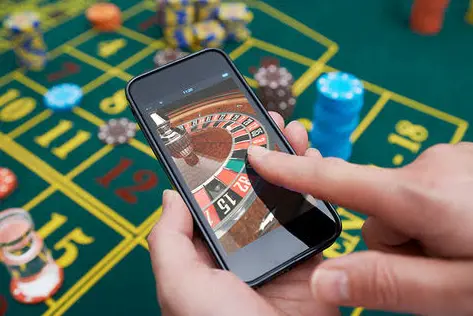
What Exactly Is a Live Casino Smart Contract?
A Live Casino Smart Contract is a self-executing agreement deployed on a programmable blockchain that governs bet placement, odds calculation, random outcome verification, and fund distribution for live-dealer games. Unlike conventional iGaming backends where a centralized server arbitrates results, the contract encodes the entire settlement pipeline in deterministic bytecode. Players interact via a provably fair interface that references verifiable random functions (VRFs) and oracle feeds, ensuring that the dealer's spin, card draw, or dice roll is immutably recorded before the round concludes.
Core Technical Components Behind the Contract Layer
At the infrastructure level, a live casino smart contract integrates four critical modules: an oracle network (e.g., Chainlink VRFs) for tamper-proof randomness, a state channel for high-frequency micro-bets, a liquidity pool for instant payouts, and an on-chain KYC/AML gate for regulatory compliance. The contract's gas optimization strategy determines whether a single hand of baccarat costs $0.03 or $3.00 in transaction fees. Advanced implementations use zk-rollups to batch thousands of wagers into a single cryptographic proof, keeping latency under 200ms — essential for live dealer synchronization. 🔗

Provable Fairness vs. Traditional RNG: The Paradigm Shift
Legacy online casinos rely on audited random number generators, but players must trust the auditor. A Live Casino Smart Contract eliminates that trust assumption. The seed, nonce, and outcome hash are published on-chain prior to each round. Any player can independently verify that the dealer's action matches the pre-committed entropy. This transparency extends to payout ratios: the contract's source code is publicly auditable, meaning house edge is mathematically proven rather than marketing-claimed. For high-rollers, this is not a feature — it is a prerequisite for participation.
Regulatory Arbitrage and Jurisdictional Nuances
Deploying a live casino smart contract across jurisdictions requires navigating a patchwork of gaming licenses, from Curaçao to Malta to the Isle of Man. The contract itself can embed geofencing logic via zero-knowledge proofs, restricting access to whitelisted wallet addresses that have passed decentralized identity verification. However, the legal status of on-chain wagering remains ambiguous in several markets, and operators must implement circuit breakers that pause contract execution if a regulator flags non-compliance. The most sophisticated deployments use modular contract proxies that allow rule updates without migrating liquidity.
Tokenomics, Staking, and Yield-Bearing Wagers
Beyond settlement, live casino smart contracts introduce novel economic primitives. Players can stake governance tokens to reduce house edge, provide liquidity to the payout pool in exchange for a share of rake, or even bet on the performance of the contract itself. This creates a meta-layer where the casino's bankroll is decentralized, and yield is distributed proportionally to risk exposure. Automated market makers (AMMs) for odds discovery are emerging, allowing dynamic pricing based on real-time liquidity depth. 💎
Security Audits and Exploit Vectors
Smart contract vulnerabilities in live casino environments are catastrophic — a reentrancy attack or oracle manipulation can drain the entire liquidity pool in a single block. Rigorous audits by firms specializing in DeFi and gaming logic are mandatory. Common exploit vectors include front-running of dealer actions, timestamp dependence for randomness, and integer overflow in payout calculations. Mitigations involve commit-reveal schemes, multi-sig emergency pauses, and formal verification of the contract's state machine. The cost of a comprehensive audit often exceeds $150,000, but it is non-negotiable for institutional-grade operations.
Latency, Streaming, and User Experience Trade-offs
The biggest friction point remains the gap between live video streaming (sub-second) and blockchain finality (seconds to minutes on L1). Layer-2 solutions and state channels bridge this gap by settling net positions periodically while keeping individual bets off-chain until resolution. The user experience must feel indistinguishable from a Web2 casino: instant bet confirmation, live dealer interaction, and immediate balance updates. Any perceptible delay destroys immersion. Forward-thinking operators are experimenting with dedicated app-chains that prioritize throughput over decentralization, creating a hybrid model where the contract logic is trustless but the consensus layer is permissioned.
The Convergence of VR, AI Dealers, and On-Chain Settlement
Looking ahead, the integration of AI-generated dealers with smart contract settlement opens a frontier where human error and dealer bias are entirely eliminated. Virtual reality tables can host players from any jurisdiction, with the contract automatically adjusting odds based on real-time player behavior analytics. The contract becomes not just a settlement engine but a dynamic game master, capable of modifying rules mid-session based on provably fair inputs. This is not science fiction — prototypes already exist on testnets, and mainnet deployments are imminent. 🚀
For operators, the strategic imperative is clear: adopt live casino smart contract infrastructure or risk obsolescence as player expectations shift toward radical transparency and instant, trustless payouts. The technology stack is mature, the regulatory frameworks are crystallizing, and the player demand for provable fairness is undeniable.